
NESFAS facilitates training for rural youth in the field of Sustainable Tourism
100 Youth Trained to Become ‘Nature Guides’ for Sustainable Tourism in Meghalaya
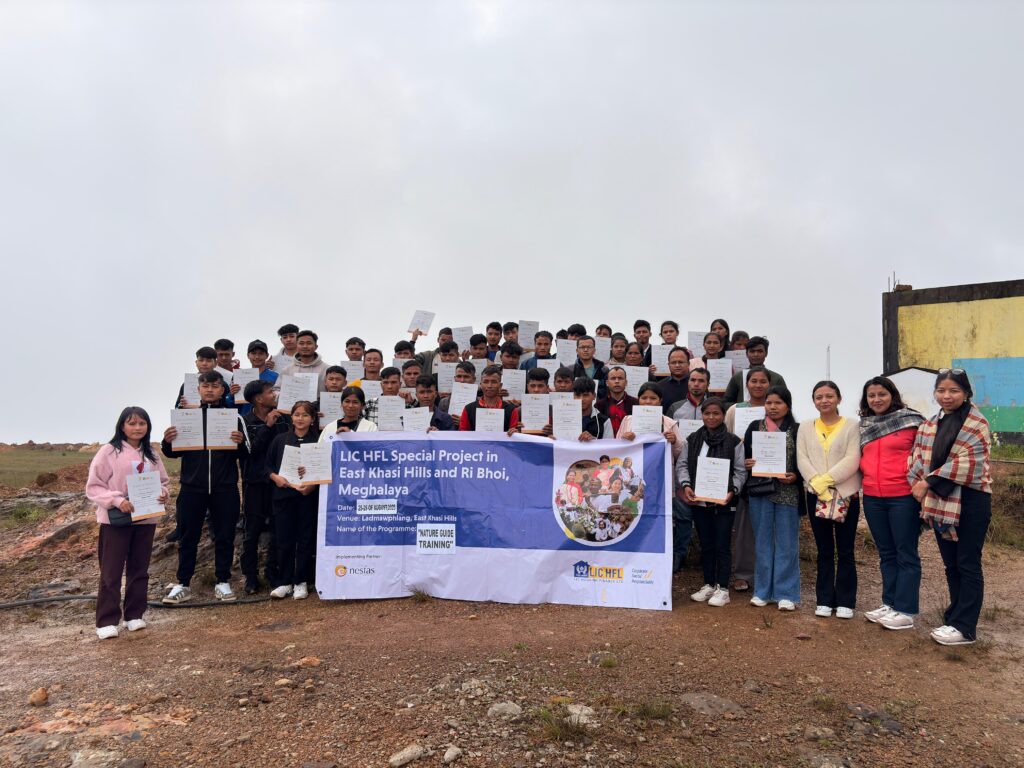
In a first-of-its-kind initiative to boost sustainable tourism in Meghalaya, a specialised
training programme was held at Ladmawphlang and Laitsohpliah in East Khasi Hills to
equip 100 rural youth with the skills to serve as Nature Guides. The programme,
conducted in two phases from August 25 to 29 and September 1 to 5, 2025, focused on
building local capacity to promote community-led, eco-friendly tourism. Organised by
NESFAS with the support of LIC-HFL, the training focused on skills and knowledge
required to pursue careers as professional tour guides, with emphasis on nature and
local landscape.
The training also focused on cultural heritage, eco-tourism, effective communication,
safety protocols, and business management, enabling participants to provide enriching
and sustainable tourism experiences. The trainers came from diverse multidisciplinary
backgrounds, including Gratia E Dkhar, Programme Head, NESFAS, Dr. Kitboklang
Nongrum, Consultant, NESFAS, Gerald Samuel Duia, Founder & Proprietor of Duia
Trailblazers, Baiarjingmut Kharbuli, Director of Excel Well Soft & Life Skills Training
Institute, Dr. H. H Mohrmen, President of Society for Urban & Rural Empowerment
(SURE), Riteilang Khongrangjem, Independent, Tour Guide and Ialamphang Lyngdoh,
President, Tour Guides Association of Meghalaya, Central body.
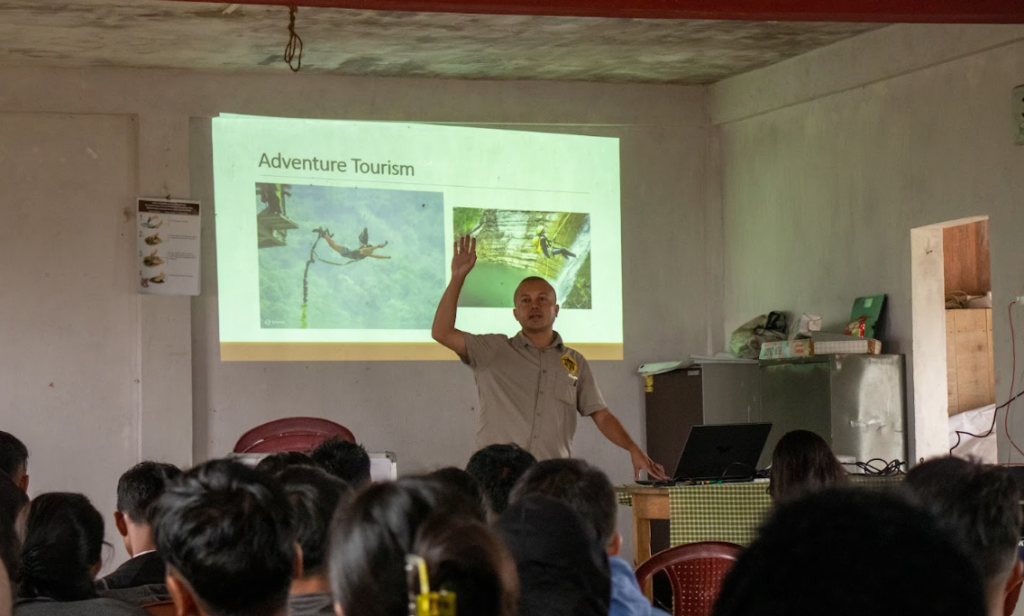
Over the five-day sessions, participants learned key themes highlighted during the
session, including culture and knowledge, sustainability and resilience, and nutrition and
health. They explored the role of tourism in Meghalaya’s economy, principles of
responsible tourism, and professional ethics. They gained insights into the rich culture
and traditions of the Khasi and Jaintia communities, significant historical and religious
sites, indigenous land rights, and biodiversity hotspots. The module also highlighted
how villages can serve as vibrant tourism hubs by engaging communities, showcasing
traditions, and promoting sustainable development.
Queentymary Jalong, a youth participant from Liarsluid expressed, “First of all, I would
like to thank NESFAS for giving us this opportunity to receive training as nature guides.
The five-day training has given us many ideas on how we should be and what we need
to do in this role. We have truly benefited a lot from this programme.”
In addition, the programme emphasised practical skills. Participants were trained in
storytelling, multilingual communication, tour planning, itinerary design, logistics,
stakeholder collaboration, safety, first aid and crisis management. They also developed entrepreneurial abilities in business development, digital marketing and online promotion to connect with wider markets.
“We initially thought this training would focus only on guiding tourists and managing
tourism, but over the five days we realised it was much more than that. It not only taught
us about tourism, but also about personal growth and how we can improve ourselves
and contribute positively in our everyday lives”, shared Sephrin Nongrum, youth,
Umsawwar.
This initiative marks a step towards enhancing employment opportunities in
Meghalaya’s tourism sector, especially for the youth. By building skills in guiding,
communication and business management, it promotes sustainable tourism,
strengthens cultural identity and fosters community involvement. At the same time, it
supports community-based tourism as a means to boost local economies.
Ladappura Pyngrope, a youth from Mawpynthymmai, said, “NESFAS has invested
greatly in providing us with quality training, and now it is our responsibility to implement
it, work diligently, and apply all that we have learned.”
“It is important to be polite, approachable, and willing to help, as these qualities
strengthen relationships and build trust”, remarked Baiarjingmut Kharbuli He also
added, “The youth must believe in themselves, take opportunities step by step, cultivate
leadership qualities, and strive to become positive influencers within their communities.”
“One of the major components of NESFAS is to improve the livelihoods of our
communities through nature-based solutions. To prepare them for immersive agri-
tourism, young people must gain the exposure needed to provide quality service to
guests. This initiative is therefore aligned with the broader vision we have as an
organisation,” shared Pius Ranee, Executive Director, NESFAS.
Gerald Samuel Duia shared, “NESFAS has done an outstanding job in educating youth
and communities about the importance of our local ecology. This time, they have scaled
up to an initiative that not only conserves the environment but also transforms
conservation into tourism livelihoods.”
He added, “I am grateful to be part of this journey as a trainer for budding eco-
conscious individuals and future tourism professionals.”
“I feel I must thank NESFAS for this training, as it has given us valuable insights into
how to work for our communities. The training has also provided us with valuable
guidance on becoming effective tour guides,” expressed Niwelsing Rynjah, youth,
Itsohpair.
“This training as a nature guide has benefited me personally. I have learned many
important values such as communication, trust, courage, kindness, and respect, which
have encouraged me to be brave and confident in pursuing this work,” said Ripynshai
Diengdoh, youth, Dewlieh.

This poem really struck a chord with me—it’s like looking into a mirror of the soul. The way Elysia Noire captures the complexity of self-discovery is both haunting and beautiful. I particularly loved the imagery in “Labyrinth of The Unseen Self”—it felt like every line was a step deeper into an emotional maze. I found myself reflecting on my own journey and the moments I’ve felt unseen or misunderstood. Do you think the labyrinth is a metaphor for the human mind, or is it something more universal? I’d love to hear your thoughts on how the poem resonates with you. What did you feel was the most powerful moment in the piece?